Eikö sinulla ole yrityssähköpostia? Klikkaa tästä!

Commercial LED Lighting Solutions Energy Efficient Smart Design
Why Upgrade to Commercial LED Lighting in 2026?
As we move toward 2026, holding onto legacy lighting systems ...
When choosing lighting fixtures for any space, brightness and color temperature are key considerations. However, the beam angle—often overlooked—is equally important. It determines how light spreads and interacts with your environment. Understanding beam angle lets you move beyond basic illumination to intentionally shape your space’s atmosphere, ensuring every area is lit as desired.
The beam angle shows how light spreads from a bulb or fixture. It is the angle where the light drops to half of its brightest point. This measurement tells you how wide the light beam is and how much it spreads on a surface.
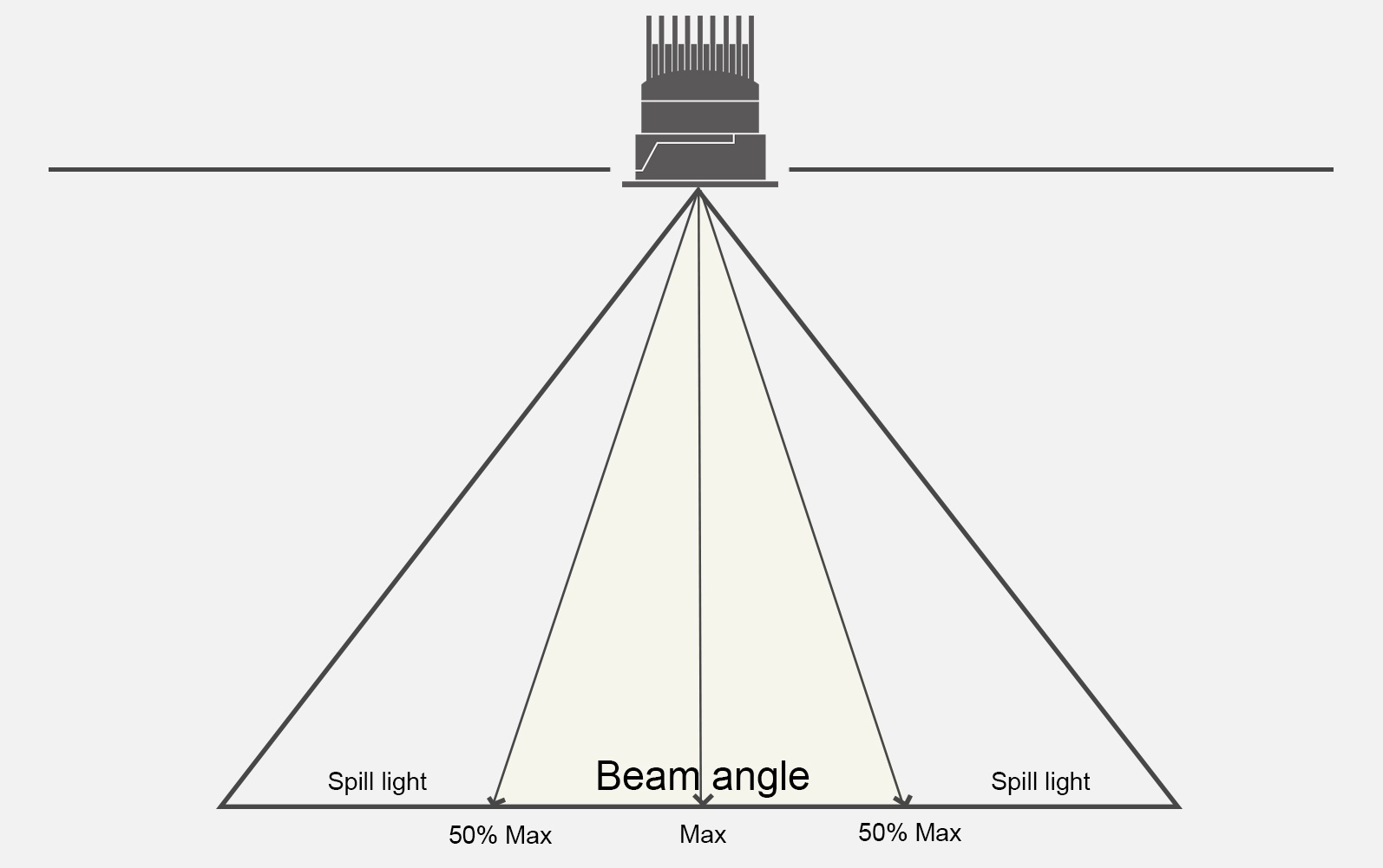
When you see a light with a 120 degree beam angle, it means the light covers a wide space. This big spread helps light fill more of the area, so it works well for lighting up large spaces. It is great for general lighting or making rooms bright and soft. You can think of it like a floodlight that lights up an entire wall or an entire room. The light spreads out evenly, so there are no strong spots or shadows.
Lighting manufacturers offer a range of common beam angles to suit different applications, from a very narrow beam to a very wide beam. These are often categorized to make selection easier. Valonheittimet typically have narrow angles to highlight objects, while floodlights use wide angles for basic lighting.
Here is a quick guide to common beam angles and their uses:
| Beam Angle (Degrees) | Beam Type |
|---|---|
| < 15° | Very Narrow Spot (Spot) |
| 15° – 30° | Narrow Beam (Spot) |
| 30° – 45° | Medium Beam (Flood) |
| 45° – 60° | Wide Beam (Flood) |
| > 60° | Very Wide Beam (Flood) |
The sädekulma is crucial because it balances light intensity with coverage area. A narrow beam concentrates the same amount of light into a smaller spot, making it appear brighter and more intense. Conversely, a wide angle spreads that light out, creating a softer, less intense illumination over a larger surface. Why should you care? Choosing the wrong angle can ruin your lighting plan. Too narrow, and you get harsh hotspots and dark voids; too wide, and the light may feel dim and lack focus.
Selecting the correct beam angle ensures that you achieve the desired effect for specific lighting tasks. For instance, accent lighting requires a narrow beam to draw attention, while general ambient lighting needs a wider beam for even coverage. Getting the sädekulma right translates to better visual comfort, enhanced aesthetics, and greater energy efficiency, as you are directing light precisely where it’s needed without waste.
Measuring the beam spread of a valaisin involves understanding how the beam of light interacts with a surface at a certain distance. The manufacturer typically specifies the beam angle, but you can visualize the beam width it will produce. The farther the fixture is from a surface, the wider the beam spread becomes.
To determine the actual coverage, you can use basic trigonometry or online beam angle calculators. However, a simpler approach is the formula mentioned earlier (Beam Width ≈ Angle × 0.018 × Distance). This calculation provides a reliable estimate for planning how many valaisimet you need and how to space them for uniform coverage without needing complex tools.
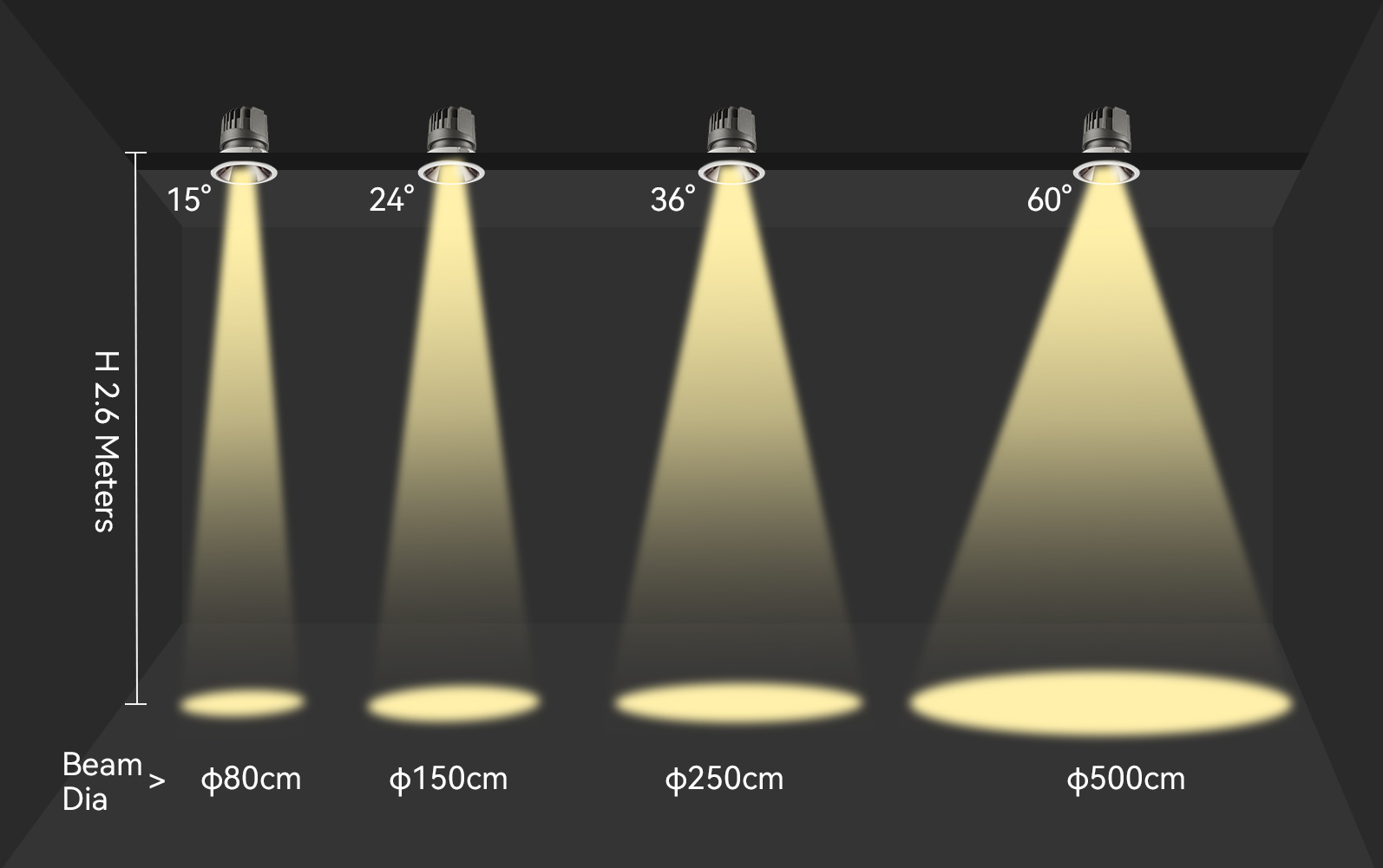
The choice between a narrow beam angle, medium beam, or wide beam angle dramatically changes the atmosphere of a space. A narrow beam angle (< 30°) acts like a spotlight. It creates high contrast, casting sharp shadows and drawing the eye to a specific point. This is perfect for creating drama, highlighting textures on a wall, or accentuating a piece of art.
A medium beam (30°-45°) offers a balance between focused and broad light. It provides good illumination for specific zones, like a kitchen island or a reading nook, without the harshness of a narrow spot. It’s a versatile choice for many general and task valaistussovellukset.
A wide beam angle (> 45°), often called a flood beam, produces soft, diffuse light that minimizes shadows and creates a bright, open, and welcoming ambiance. It’s ideal for general illumination in living rooms, offices, and hallways where uniform light is the goal.
Finding the sädekulma of a valaisin is usually straightforward. The manufacturer will list this specification on the product packaging, in the technical data sheet, or on the product page online. Look for a number followed by a degree symbol (e.g., 25°) or terms like “spot” or “flood.”
If the information isn’t available, you might have to do a quick measurement yourself. Shine the light on a wall from a known distance and measure the diameter of the brightest part of the light circle. While not perfectly precise without a light meter, this can give you a rough estimate to differentiate between narrow, medium, and wide light sources.
The right sädekulma choice is heavily dependent on the application place. Your lighting design goals will differ significantly between a cozy home and a bustling retail store, so the beam angles must be adapted accordingly.
Osoitteessa residential buildings, the focus is often on creating a warm and inviting atmosphere. This might involve layering different beam angles—wider beams for general ambient light and narrower beams to highlight artwork or architectural features.
In contrast, commercial buildings like offices or warehouses prioritize functionality and safety, often requiring uniform, wide-beam illumination. Retail and hospitality spaces use a mix of beam angles to guide customers, highlight products, and create a specific brand ambiance.
Ceiling height is one of the most important factors to consider when selecting valaisimet. A light’s beam spread widens as the distance from the source to the surface increases. This means a fixture on a tall ceiling will create a larger pool of light on the floor than the same fixture on a low ceiling.
For low ceilings (8 feet or less), a wide beam angle (60° or more) is often the best beam angle. It provides broad, even coverage area without creating uncomfortably bright “hotspots.” Using a narrow beam with low ceilings can result in a disconnected, spotty lighting effect.
Conversely, for high ceilings (10 feet or more), a narrower beam angle (25°-40°) is needed. This ensures the light is concentrated enough to reach the floor with sufficient intensity. Using a wide beam angle from a high ceiling can cause the light to become too diffuse and dim by the time it reaches its target.
Choosing the best beam angle comes down to defining your goal. Are you performing specific lighting tasks that need bright, focused light, or are you trying to create general, ambient illumination? The correct beam angle will align with the function of the space.
For general lighting where yhtenäisyys is key, such as in an office or hallway, a wider beam angle (45° or more) is typically best. For accent or task lighting, where you need to draw attention or illuminate a work surface, a narrower beam angle (under 30°) is more effective. Always consider ceiling height and the spacing between fixtures to achieve your desired outcome.
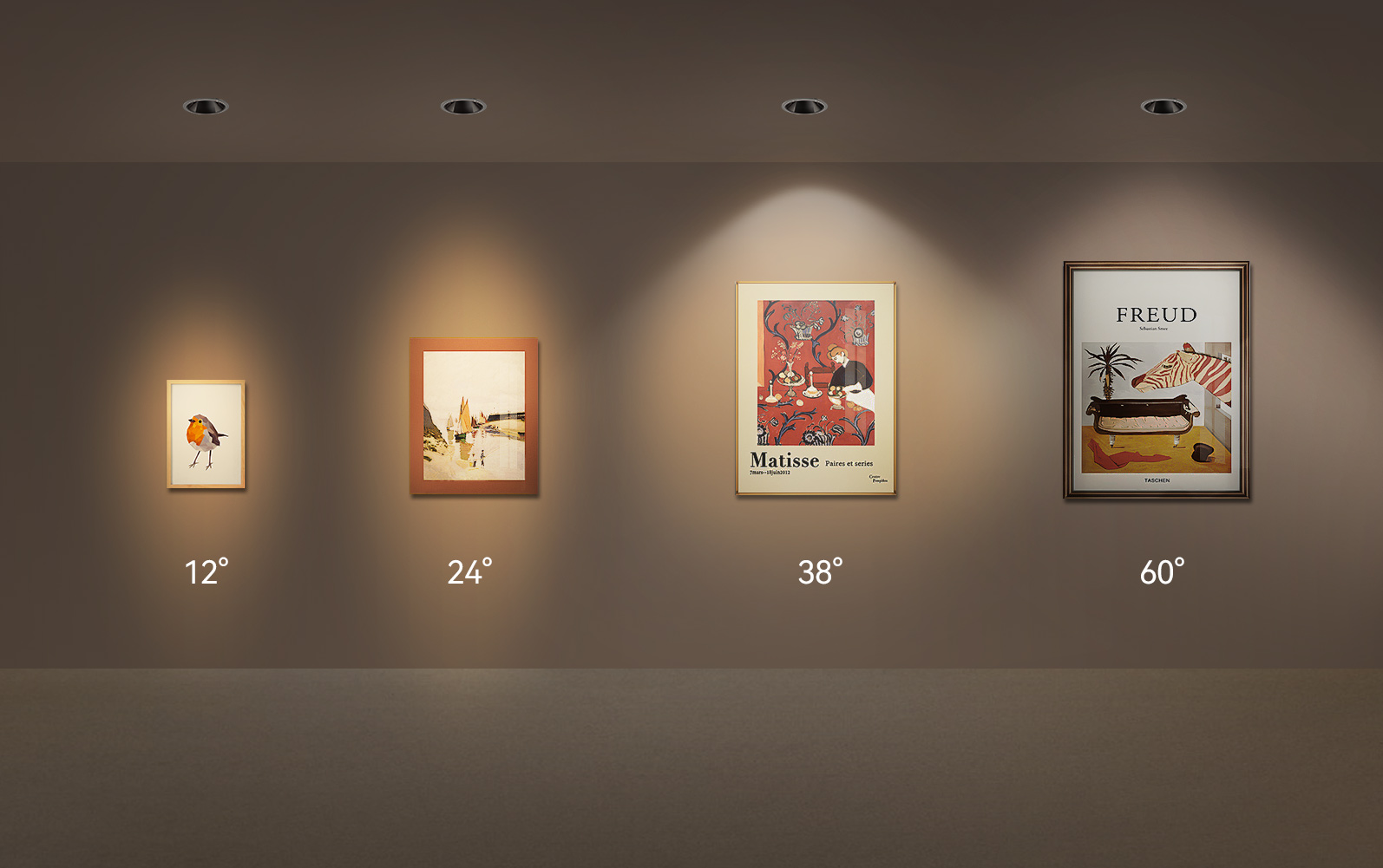
Osoitteessa residential applications, a layered approach using different angles creates a dynamic and comfortable environment. For general ambient lighting in a olohuone, a wide beam angle of 40°-60° from recessed downlights provides soft, even illumination.
In the kitchen, a mix of beam angles is ideal. Use wide beams for general lighting and medium or narrow beams (25°-40°) over countertops and islands for effective task lighting. This ensures work areas are bright and shadow-free.
Osoitteessa bedrooms, a softer approach is best. Wide beam angles create a relaxing ambiance, while narrow-beam reading lights mounted by the bed provide focused light without disturbing a partner.
Selecting the appropriate beam angle is crucial for commercial and retail spaces, where lighting design significantly influences both ambiance and functionality. Retail stores benefit from focused narrow beams to accentuate products, creating an enticing display that grabs consumer attention. In contrast, wider beams are essential for offices, promoting uniformity and preventing harsh shadows, which can impact employee productivity.
In galleries and showrooms, lighting fixtures must provide the right beam angle to highlight artwork or products without overwhelming the viewer. The choice of light sources, such as spotlights or floodlights, also plays a role in achieving the desired light intensity and coverage area. Ultimately, balancing different angles can enhance the overall aesthetic and functionality of these spaces, ensuring that they are not only well-lit but also inviting.
One of the most common mistakes people make is choosing a single beam angle for an entire space, leading to a flat and uninspired lighting scheme. Another error is ignoring the impact of ceiling height. Professional lighting solutions can help you avoid these pitfalls.
This is where brands like SUNME LIGHTING excel. They offer valaisimet with customizable beam angle options, providing the flexibility needed for sophisticated lighting designs. Instead of being locked into a standard angle, you can select the right beam angle for each specific application within your project, all from one trusted supplier.
With SUNME LIGHTING, you can precisely tailor the illumination to fit the unique needs of a commercial or high-end residential space.
In conclusion, understanding beam angle is crucial to achieving optimal lighting in any space. Whether you are illuminating your home, retail environment, or office, selecting the right beam angle can significantly influence the ambiance and functionality of the area. By considering factors like ceiling height and the purpose of the lighting, you can make informed decisions that enhance both aesthetics and practicality. Remember, the beam angle not only impacts how light is distributed but also interacts with the elements within the space. For tailored lighting solutions that meet your specific needs, consider exploring the customizable beam angle options from SUNME LIGHTING. Embrace the power of light to transform your environments today!
Eikö sinulla ole yrityssähköpostia? Klikkaa tästä!
Lähetämme tiedostot sinulle 24 tunnin kuluessa!Eikö sinulla ole yrityssähköpostia? Klikkaa tästä!
 EN EN
EN EN DE
DE ES
ES PT
PT FR
FR RU
RU AR
AR IT
IT TR
TR FI
FI SV
SV HU
HU NL EN EN DE ES PT FR RU AR IT TR FI SV HU NL