Har du ingen e-postadress för ditt företag? Klicka här!
Commercial LED Lighting Solutions Energy Efficient Smart Design
Why Upgrade to Commercial LED Lighting in 2026?
As we move toward 2026, holding onto legacy lighting systems ...
Lighting has come a long way from the days of guessing how bright a bulb would be based on its wattage alone. In the era of LED technology, understanding lumen to watts is key to choosing the right brightness for your home, office, or store — without wasting energy or money.

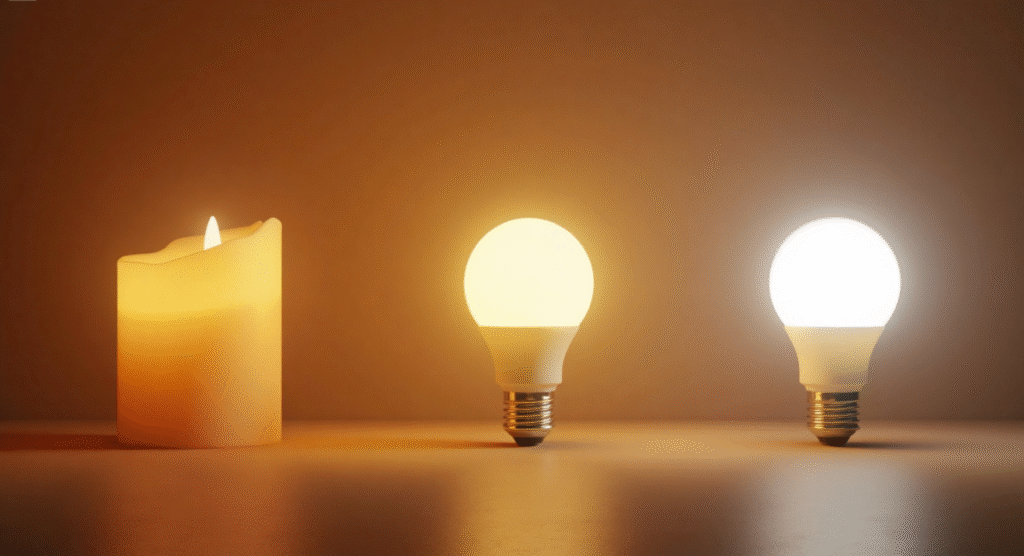
A lumen (lm) is the standard unit of luminous flux, measuring the total amount of visible light emitted by a source. The higher the lumen value, the brighter the light.
The CIE (International Commission on Illumination) defines lumens based on human visual sensitivity, so they represent perceived brightness rather than raw energy.

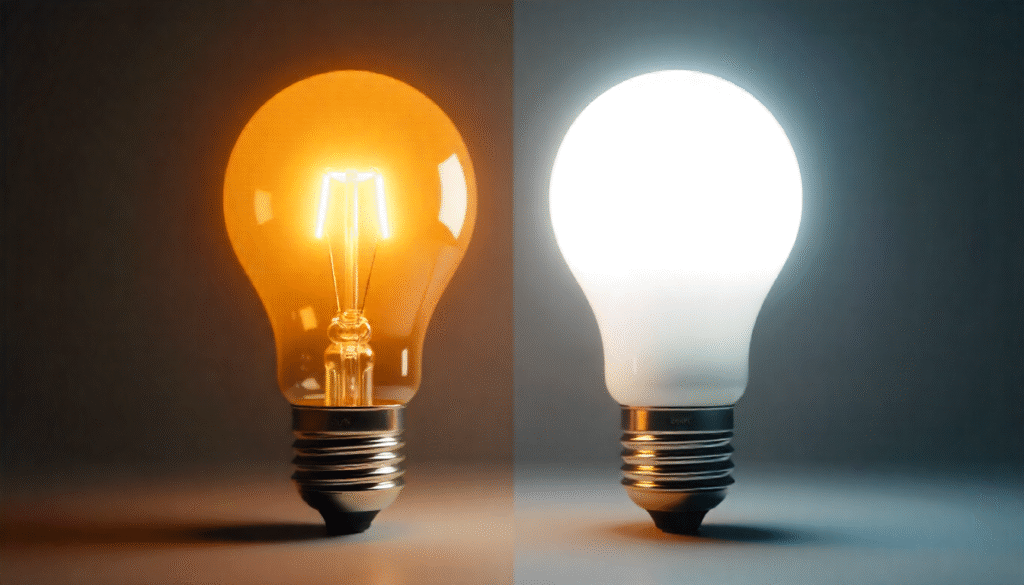
A watt (W) measures power consumption, not brightness. In older incandescent bulbs, higher wattage meant more light, because they were inefficient — most energy turned into heat.
With LEDs, wattage no longer correlates directly to brightness, so you can’t just “buy a 60W bulb” anymore — you must check the lumens.

| Ljuskälla | Typical Efficacy (lm/W) | Example |
|---|---|---|
| Incandescent | 10–17 | 60W = ~800 lumens |
| Halogen | 16–25 | 43W = ~800 lumens |
| CFL (Compact Fluor.) | 35–60 | 15W = ~800 lumens |
| LED (modern) | 80–150+ | 8–10W = ~800 lumens |
Key takeaway: LEDs deliver the same brightness using up to 85% less energy than incandescent bulbs.
Because LEDs have much higher luminous efficacy, the conversion depends on the light type.
General formula: Watts = Lumens ÷ Lumens per Watt
Example: How many watts is 800 lumens for an LED bulb?
800 lm ÷ 100 lm/W = 8 W
| Lumens | Incandescent (W) | CFL (W) | LED (W) |
|---|---|---|---|
| 450 | 40 | 9–10 | 4–5 |
| 500 | 40–45 | 10–11 | 5–6 |
| 800 | 60 | 13–15 | 8–10 |
| 1000 | 75 | 18–20 | 10–12 |
| 2000 | 150 | 30–35 | 20–25 |
| 3000 | 200+ | 45–50 | 30–35 |
Tip: For quick mental math, most modern household LEDs average ~100 lm/W.
| Space / Application | Recommended Lumens per m² (lux) | Example for 10m² |
|---|---|---|
| Vardagsrum | 100–200 lux | 1,000–2,000 lm |
| Kök | 300–500 lux | 3,000–5,000 lm |
| Kontor | 300–500 lux | 3,000–5,000 lm |
| Reading Area | 400–600 lux | 4,000–6,000 lm |
| Retail Store | 500–1,000 lux | 5,000–10,000 lm |
| Library | 300–500 lux | 3,000–5,000 lm |
Pro tip: Always consider beam angle — narrow beams appear brighter in a focused area.
8–10W for most modern LEDs.
Incandescent ≈ 40W, LED ≈ 4–5W.
Lumens measure brightness, watts measure energy use.
About 10–12W.
Around 20–25W.
Around 30–35W.
Yes, use an LED with ~800 lumens (~8–10W).
Yes, it shows how efficiently a bulb turns electricity into light.
Many lighting manufacturers, including SunmeLighting.
In most cases, yes — they last longer, use less energy, and have better light quality.
Understanding lumen to watts is essential in the LED era. Instead of relying on outdated watt ratings, always check lumens to get the brightness you need with minimal energy waste.
Vid SunmeLighting, we specialize in high-efficiency LED solutions designed for homes, offices, and commercial spaces. Explore our lumen-to-watt calculator and product range to find the perfect match for your next lighting upgrade.
Har du ingen e-postadress för ditt företag? Klicka här!

Vi skickar filerna till dig inom 24 timmar!Har du ingen e-postadress för ditt företag? Klicka här!