Was ist ein TRIAC-Dimmer?
A TRIAC-Dimmer ist eine Art von Phasenabschnittsdimmer der die Helligkeit Ihrer Lampen durch “Zerhacken” des zur Lampe geleiteten Wechselstroms steuert. Anstatt die Spannung wie ein Transformator stufenlos abzusenken, wird ein TRIAC-Dimmschalter schaltet den Strom bei jedem Wechselstromzyklus schnell ein und aus, so dass das Licht tatsächlich weniger Energie verbraucht und dunkler erscheint.
Im Klartext:
A TRIAC-Dimmer ist ein intelligenter Lichtschalter, der nicht nur sagt ON oder AUS - es kontrolliert wie viel Der Strom erreicht die Glühbirne, indem Teile der Wechselstromwellenform abgeschnitten werden. Das nennen wir AC-Phasensteuerung Dimmen oder Dimmen der Vorderkante (auch bekannt als Vorwärtsphasen-Dimmer).
TRIAC-Dimmer vs. einfacher Ein/Aus-Schalter
Eine grundlegende Glühbirnenschalter hat nur zwei Jobs:
- ON - volle Netzspannung, 100% Helligkeit
- AUS - kein Strom, 0% Helligkeit
A TRIAC-Dimmschalter fügt Intelligenz hinzu:
- Verwendet eine TRIAC-Dimmer-Schaltung zur Kontrolle der Schusswinkel der AC-Wellenform
- Passt die Helligkeit von niedrig bis hoch mit einem Drehknopf, Schieber, Paddel, oder sogar eine WiFi-Dimmschalter
- Kann als normales Gerät verwendet werden einpoliger Abblendschalter oder 3-Wege-Abblendschalter in Mehrwegeinrichtungen
Anstatt einfach nur ein Licht anzuknipsen, kann ich also die Lautstärke und die Stimmung im Raum von derselben Stelle aus feinabstimmen. TRIAC-Dimmer für Wandmontage.
Wo ich TRIAC-Dimmer tatsächlich verwende
In echten Wohnungen und kleinen Geschäftsräumen verwende ich TRIAC-Dimmen überall dort, wo ich einfaches, erschwingliches Dimmen mit Netzspannung ohne spezielle Steuerleitungen möchte:
Zu Hause:
- Wohn- und Schlafräume für weiches, warmes Umgebungslicht
- Esszimmer, in denen ich helles Licht zum Arbeiten und schwaches Licht zum Essen haben möchte
- Flure und Eingangsbereiche mit einer Dimmschalter für Heimbeleuchtung für nächtlichen Komfort
In kleinen Unternehmen:
- Cafés und Restaurants, die eine flexible Stimmungsbeleuchtung benötigen
- Einzelhandelsgeschäfte, die eine Akzentbeleuchtung wünschen, ohne komplexe Steuerungssysteme zu installieren
- Kleine Büros bei der Modernisierung alter Glühbirnen-Abblendschalter zu LED-kompatible Dimmer
Da der TRIAC direkt auf Dimmen der Netzspannung, Ich benötige keine zusätzlichen Niederspannungs-Steuerleitungen wie 0-10V oder DALI für grundlegende Szenarien.
Warum TRIAC-Dimmen bei LEDs immer noch allgegenwärtig ist
Auch im Zeitalter der LED, TRIAC-Dimmer weigern sich, zu verschwinden, und dafür gibt es echte Gründe:
- Vorhandene Verkabelung - Die meisten Gebäude sind einfach verkabelt Netzspannungsdimmer, keine zusätzlichen Steuerkabel
- Nachrüstungsfreundlich - A TRIAC-Dimmer zum Nachrüsten kann einen alten Schalter oft in wenigen Minuten ersetzen
- Kostengünstig - Eine grundlegende LED-Dimmschalter (TRIAC-basiert) ist viel billiger als ein intelligentes Treibersystem
- Universelle Kompatibilitätsoptionen - Viele moderne Universal-LED-Dimmer und TRIAC-LED-Treiber sind konzipiert für flackerfreies TRIAC-Dimmen mit LED-Glühbirnen
Solange ich mich für eine LED-kompatibler Dimmer und eine dimmbare LED-Treiber das unterstützt Phasenanschnittdimmung, bleibt der TRIAC ein sehr praktischer und weltweiter Standard für die tägliche Beleuchtungssteuerung.
Wie ein TRIAC-Dimmer funktioniert
Grundlagen des Wechselstromnetzes und Phasensteuerung
Ob zu Hause oder in einem kleinen Unternehmen, Ihr Licht läuft mit AC-Netz (230V/120V, 50/60 Hz). Die Spannung ist eine gleichmäßige Sinuswelle, die 50-60 Mal pro Sekunde positiv und negativ ist.
Ein einfacher Schalter schaltet die Sinuswelle vollständig ein oder aus. A TRIAC-Dimmer verwendet stattdessen AC-Phasensteuerung Dimmen: Sie lässt nur einen Teil jedes Halbzyklus durch, so dass das Licht weniger Strom erhält und schwächer erscheint.
Was Dimmen mit Phasenanschnitt bedeutet
Dimmen mit Phasenanschnitt (auch genannt Phasensteuerung oder Phasenabschnittsdimmer) bedeutet, dass der Dimmer einen Teil jeder AC-Wellenform “abschneidet” oder blockiert:
- Es wartet eine kurze Zeit nach jeder Nulldurchgang (wenn die Spannung 0 V durchläuft)
- Dann schaltet er sich ein und liefert den Rest dieses Halbzyklus an die Lampe
- Je später sie sich einschaltet, desto weniger Energie geht an die Lampe → geringere Helligkeit
Aus diesem Grund werden TRIAC-Dimmer auch als Vorwärtsphasen-Dimmer oder Spitzenreiter unter den Dimmern.
TRIAC-Dimmen und zerhackte Wellenform mit vorderer Flanke
A TRIAC-Dimmer der Spitzenklasse hackt die Vorderseite (Vorderkante) eines jeden Halbzyklus:
- Wellenform beginnt bei Null → Dimmer hält sie aus
- Bei einem bestimmten Winkel schaltet sich der TRIAC ein → die Wellenform springt plötzlich nach oben
- Das schafft die klassische “zerhackte” AC-Wellenform sehen Sie in den Scope-Screenshots
Mit Glühbirne oder Halogen (a ohmsche Last), funktioniert dies sehr gut. Mit einigen LED-Treiber mit kapazitiver Last, Diese scharfe Kante kann zu Summen, Flimmern oder frühzeitiger Ausfall wenn der Treiber nicht für Dimmen der Netzspannung.
TRIAC-Trigger und Auslösewinkel
Im Inneren eines TRIAC-Dimmer-Schaltung, Der TRIAC ist wie ein elektronischer Schalter. Er schaltet sich ein, wenn sein Tor einen Triggerimpuls erhält. Die Verzögerung vor diesem Trigger ist die Schusswinkel:
- Kleiner Auslösewinkel (früh im Halbzyklus einschalten) → mehr Wellenform → heller
- Großer Abschusswinkel (spätes Einschalten) → weniger Wellenform → Dimmer
Die Elektronik des Dimmers steuert diese Verzögerung in jedem Halbzyklus. Das ist der Kern von TRIAC-Zündwinkelsteuerung und warum es eine so billige und zuverlässige Methode ist, um Dimmschalter für die Heimbeleuchtung.
Analoge und digitale TRIAC-Dimmersteuerung
Modern TRIAC-Dimmschalter für LED-Lampen kann sein analog oder digital innen:
- Analoger TRIAC-Dimmer
- Verwendet ein einfaches RC-Timing und einen DIAC zur Ansteuerung des TRIAC
- Billig, robust, aber weniger präzise und weniger flexibel
- Digitaler TRIAC-Dimmer (intelligenter TRIAC-Dimmer)
- Verwendet einen Mikrocontroller, Nulldurchgangserkennung und digitale Zeitmessung
- Feinere Kontrolle, besser flackerfreies TRIAC-Dimmen, anpassungsfähig an unterschiedliche dimmbare LED-Treiber
- Fügt oft hinzu WiFi-Dimmschalter, Zigbee, RF-Fernbedienung oder App/Sprachsteuerung
In der Praxis ist eine gut durchdachte digitaler Phasenabschnittsdimmer sorgt für ein sanfteres Low-End LED-Dimmbereich, weniger Summender LED-Dimmschalter, und eine bessere Kompatibilität mit TRIAC-LED-Treiber und Universal-LED-Dimmer auf den globalen Märkten verwendet.
Triac-Dimmer im Vergleich zu anderen Dimmverfahren
Triac-Dimmen an der Vorderkante im Vergleich zu Dimmern an der Hinterkante (ELV)
Bei der Beleuchtung mit Netzspannung entscheiden sich die meisten Menschen für eine TRIAC-Dimmer für die Vorderflanke (Vorwärtsphasendimmer) und eine Dimmer für die abfallende Flanke (ELV / Phasenabschnittsdimmer).
Führende TRIAC-Dimmung (klassischer TRIAC-Dimmer):
- Schneidet die Vorderseite der AC-Wellenform (Phasenabschnittsdimmer, Vorwärtsphase).
- Am besten für Glühbirne und Halogen - Dimmen der reinen ohmschen Last.
- Einfach, billig, überall, leicht nachrüstbar.
- Nicht immer freundlich zu LED-Treiber mit kapazitiver Last, kann dazu führen, dass Summender LED-Dimmschalter oder LED-Dimmschalter flackert wenn der Treiber nicht für TRIAC-Dimmen ausgelegt ist.
Dimmer für die hintere Kante (ELV / Phasenabschnittsdimmer):
- Schneidet die zurück der AC-Wellenform (Phasenumkehrdimmer).
- Konzipiert für elektronische Niederspannungstransformatoren und LED-Treiber mit kapazitiver Last.
- Normalerweise leiser und geschmeidiger, weniger Wärmeableitung in Dimmern, besser für “flimmerfreie LED-Beleuchtung”.
- Das kostet mehr, und nicht jede ältere Lampe ist damit zufrieden.
Wenn ich hauptsächlich moderne LED-Glühbirnen oder TRIAC-LED-Treiber, Ich bevorzuge Phasenabschnittsdimmer / Universal-Phasenabschnittsdimmer wenn es das Budget zulässt, weil es besser mit Mischlasten und Lärm umgehen kann.
Triac-Dimmer vs. 0-10V-Dimmen für gewerbliche Beleuchtung
In Wohnungen, Dimmen der Netzspannung mit einem TRIAC-Dimmschalter ist immer noch König. Bei kommerziellen Projekten sieht man eine Menge von 0-10V Dimmen gegenüber TRIAC Vergleiche:
TRIAC-Dimmen (Dimmen mit Phasenanschnitt):
- Verwendet AC-Phasensteuerung Dimmen direkt an das Stromnetz angeschlossen werden.
- Ideal für TRIAC-Dimmer zum Nachrüsten wird dort installiert, wo bereits Leitungen in der Wand verlegt sind.
- Einfach Dimmschalter für Heimbeleuchtung Upgrade ohne zusätzliche Steuerleitungen.
- Mehr Variation in Kompatibilität mit TRIAC-Dimmern mit verschiedenen LED-Treibern.
0-10V Dimmen:
- Benötigt ein zusätzliches Paar Niederspannungs-Steuerleitungen getrennt vom Netz.
- Sehr häufig in Dimmen von kommerzieller Beleuchtung, Büros, Einzelhandel.
- Gut geeignet für große Gruppen von Einrichtungsgegenständen und präzise LED-Dimmbereich Kontrolle.
- Besser vorhersehbar mit dimmbare LED-Treiber; bei korrekter Installation weniger Flimmerrisiko.
Wenn ich ein Gebäude baue oder renoviere neue Gewerbeflächen, gebe ich normalerweise 0-10V Dimmen. Wenn ich ein bestehendes Geschäft oder Restaurant ohne zusätzliche Steuerleitungen aufrüste, ist ein guter LED-kompatibler Dimmer (TRIAC) ist oft die praktischere Wahl.
Triac-Dimmer vs. PWM-Dimmer in LED-Streifen und -Treibern
PWM-Dimmen gegenüber TRIAC kommt häufig vor bei LED-Streifen und individuelle Beleuchtung:
TRIAC-Dimmer:
- Konzipiert für Netzeingänge.
- Benötigt eine Phasenanschnitt-LED-Treiber / TRIAC-LED-Treiber die das Dimmen mit Phasenanschnitt zulässt.
- Am besten, wenn Sie eine normale TRIAC-Dimmer für Wandmontage der wie ein normaler Schalter aussieht.
PWM-Dimmen:
- Dimmt durch schnelles Ein- und Ausschalten der LED mit einer hohen Frequenz.
- Verwendet in LED-Streifen-Steuerungen, Niederspannungs-TRIAC-Dimmer-Alternativen, und viele intelligente Fahrer.
- Erzeugt eine sehr stabile Helligkeit und Farbe, insbesondere bei niedrigen Pegeln, und kann völlig “flimmerfrei” sein, wenn die Frequenz hoch genug ist.
Wenn ich eine Wand-, Vouten- oder Bandbeleuchtung mit separaten Treibern, nehme ich normalerweise die PWM-Dimmen hinter den Kulissen und verwenden entweder:
- A TRIAC-PWM-Schnittstelle (so dass es immer noch mit einem Wand-TRIAC-Dimmer funktioniert), oder
- A spezielle LED-Steuerung (WiFi-Dimmerschalter, Zigbee-Dimmermodul, RF-Fernbedienungsdimmer usw.).
Wann würde ich einen Triac-Dimmer einem intelligenten Treiber oder DALI vorziehen?
Es gibt eine Menge Gerüchte über DALI vs. TRIAC-Dimmer und intelligente Fahrer. Ich wähle immer noch eine TRIAC-Dimmer in einer Vielzahl von realen Projekten:
I einen TRIAC-Dimmer wählen wenn:
- Ich aktualisiere ein bestehendes Haus oder kleines Unternehmen und ich will:
- A einfacher einpoliger Dimmschalter oder 3-Wege-Abblendschalter die jeder nutzen kann.
- Keine zusätzliche Niederspannungsverkabelung, keine Knotenpunkte, keine Schalttafeln.
- Die Vorrichtungen haben bereits LED-Treiber mit Phasenanschnittsteuerung oder dimmbare LED-Glühbirnen mit Netzspannung markiert als “TRIAC-kompatibel”, “universeller LED-Dimmer” oder “flimmerfreies TRIAC-Dimmen”.”.
- Der Kunde möchte eine kostengünstige und zuverlässige Kontrolle, keine vollständige Smart Home oder DALI-Netzwerk.
I Überspringen Sie TRIAC und gehen Sie zu Smart / DALI wenn:
- Das Gebäude braucht zentrale Steuerung, Szenen, Planung und Integrationen über viele Zonen hinweg.
- Es gibt Hunderte von Leuchten wo präzise, wiederholbare Werte wichtig sind.
- Wir sind standardisiert auf DALI, 0-10V, oder intelligente Relais anstelle der klassischen Glühbirnen-Abblendschalter.
Kurz gesagt: für Nachrüstungen und alltägliche Hausbeleuchtung, a guter LED-kompatibler TRIAC-Dimmer ist nach wie vor eine der kostengünstigsten, weltweit verfügbaren Optionen. Für große, vernetzte Systeme, ziehe ich nach intelligente Treiber, DALI oder 0-10V und verwenden Sie TRIAC nur dort, wo es praktisch sinnvoll ist.
Kompatibilität mit Triac-Dimmern und LEDs
Warum ältere TRIAC-Dimmer für Glühlampenlasten hergestellt wurden
Klassisch TRIAC-Dimmer wurden für entwickelt:
- Glühbirnen und Halogenlampen (rein ohmsche Lasten)
- Hoch Wattzahl pro Stromkreis (oft 300-600 W+)
- Einfach Dimmen der Vorwärtsphase/Vorderkante (einfacher AC-Phasenabschnittsdimmer)
Diese Lampen haben sich mit einer zerhackten AC-Wellenform gut verhalten. Keine Elektronik, keine Treiber, nur ein heißer Glühfaden. Moderne LED-Glühbirnen sind anders: Sie verwenden eine interne LED-Treiber und sehen oft aus wie ein kapazitive Belastung, der ganz anders reagiert als ein Standard Glühbirnenabblendschalter.
Übliche TRIAC-Dimmer- und LED-Probleme (Flackern, Brummen, Ausfälle)
Wenn Sie einen alten TRIAC-Dimmer mit den falschen LED-Glühbirnen, können Sie bekommen:
- LED-Dimmschalter flackert
- Zufälliges Flimmern bei niedrigen Pegeln
- Strobe-Effekt, wenn andere Verbraucher eingeschaltet werden
- Summen oder Brummen
- Summender LED-Dimmschalter an der Wandplatte
- Lampen brummen, weil der Treiber durch die zerhackte Wellenform belastet wird
- Schlechter Dimmbereich
- Lichter springen von “zu hell” auf “aus”
- Wird nicht unter ~30-40% gedimmt
- Plötzlicher Abbruch am unteren Ende des Schiebereglers
- Lichter werden nicht vollständig ausgeschaltet
- Glühen, wenn “aus”
- Geisterbilder oder Blinken alle paar Sekunden
Bei all dem geht es um Kompatibilität mit TRIAC-Dimmern mit dem LED-Treiber in der Glühbirne.
Mindestlast, Höchstlast und Dimmbereich
TRIAC-Dimmer benötigen eine bestimmte Last, um richtig zu funktionieren:
- Mindestlast für Dimmer
- Alte Dimmer benötigen mindestens 40-60 W
- Ein paar 6-9 W LED-Lampen erreichen dieses Minimum nicht.
- Ergebnis: unbeständig AC-Phasensteuerung Dimmen, Flackern oder gar keine Dimmung
- Maximale Belastung
- Bewertung wie “300 W LED / 600 W Glühlampe”
- Beachten Sie bei LEDs immer die LED Nennwert, nicht den Glühlampenwert
- Überlastung = Hitze, Abschaltung oder vorzeitiger Ausfall
- LED-Dimmbereich
- Selbst mit einem guten LED-kompatibler Dimmer, erwarten Sie einen kleineren glatten Bereich
- Viele Geräte dimmen sauber von ~10-100% mit “flackerfreier TRIAC-Dimmung”, nicht 0-100%
Wie ein TRIAC-LED-Treiber für Kompatibilität sorgt
A TRIAC-LED-Treiber (oder “phasengesteuerter LED-Treiber”) ist für den Betrieb mit Vorwärtsphasen-Dimmer und Universal-Phasenabschnittsdimmer:
- Akzeptiert zerhackte Wechselstromwellenform von einer Phasenabschnittsdimmer
- Übersetzt die Triac-Zündwinkelsteuerung in einen sauberen DC-Ausgang für LEDs
- Griffe ohmsche + kapazitive Last sicheres Verhalten
- Oft bewertet als:
- “TRIAC-Dimmen”
- “Phasenanschnitt-LED-Treiber”
- “TRIAC / ELV Universal-LED-Dimmer kompatibel”
Wenn Sie eine TRIAC-LED-Treiber mit einer angemessenen LED-Dimmschalter, verschwinden die meisten der Probleme mit Flimmern, Brummen und geringer Reichweite.
So prüfen Sie, ob ein LED-kompatibler Dimmer mit Ihren Glühbirnen funktioniert
Bevor Sie ein Gerät kaufen oder installieren TRIAC-Dimmer für Wandmontage für LED, würde ich das tun:
- Prüfen Sie die Dimmerspezifikation
- Suchen Sie nach: “LED-kompatibler Dimmer”, “Universal-Phasenabschnittsdimmer”, “Vorwärtsphasen-Dimmer”, oder “TRIAC vs. ELV-Dimmen: universal”
- Bestätigen Sie minimale und maximale LED-Last auf dem Datenblatt.
- Prüfen Sie die Glühlampen- oder Treiberspezifikation
- Sollte deutlich sagen: “dimmbar”
- Suchen Sie nach: “TRIAC-Dimmen”, “Dimmen der Netzspannung”, “Phasenanschnitt-LED-Treiber” oder “kompatibel mit dem Dimmen der Vorderkante”
- Wenn es heißt 0-10V Dimmen oder Nur PWM, nicht mit einem Standard-TRIAC-Dimmer koppeln.
- Kompatibilitätslisten der Hersteller verwenden
- Viele Marken veröffentlichen Kompatibilität mit TRIAC-Dimmern Tabellen:
- Dimmer-Modell → Geprüfte LED-Lampen/Treiber
- Wenn Ihre Lampe und Ihr Dimmer beide in der Liste des jeweils anderen auftauchen, sind Sie auf der sicheren Seite.
- Testen Sie zunächst mit einer kleinen Einrichtung
- Versuchen Sie 1-2 Glühbirnen an einer einpoliger Abblendschalter
- Prüfen Sie auf:
- Sanftes Dimmen von hoch zu niedrig
- Kein sichtbares Flimmern bei niedrigen Pegeln
- Kein Brummen von Lampen oder Schaltern
- Lichter werden vollständig ausgeschaltet
Wenn ich unsicher bin, wähle ich eine Universal-LED-Dimmer speziell vermarktet als flackerfreies TRIAC-Dimmen und mit LED-Glühbirnen kombinieren, die diese Dimmermarke oder diesen Dimmertyp auf ihrer Verpackung angeben. Das ist der zuverlässigste Weg für Haushalte und kleine gewerbliche Projekte weltweit.
Vor- und Nachteile von Triac-Dimmern
Die wichtigsten Vorteile des TRIAC-Dimmens in realen Wohnungen und Projekten
Für die meisten Kunden auf der ganzen Welt ist ein TRIAC-Dimmer immer noch der praktischste Dimmschalter für die Heimbeleuchtung. In realen Projekten verlasse ich mich auf TRIAC-Dimmer, weil sie eine einfache Möglichkeit bieten, die Netzspannung zu dimmen, ohne die Verkabelung zu ändern.
Die wichtigsten Vorteile eines wandmontierten TRIAC-Dimmers:
- Einfache Nachrüstung: Funktioniert mit vorhandenen 230V/120V-Leitungen; ideal für die Aufrüstung eines alten Glühbirnen-Dimmschalters zu einem Dimmschalter für LED-Lampen.
- Geringe Kosten: Standard-Dimmer mit Vorwärtsphase sind billiger als intelligente Treiber, 0-10V, DALI oder vollständige Steuersysteme.
- Riesiges Ökosystem: Jeder Elektrogroßhändler und jeder Baumarkt führt irgendeine Form von Universal-Phasenabschnittsdimmern, Niederspannungs-TRIAC-Dimmern und Netzspannungsdimmern.
- Einfache Benutzererfahrung: Eine Dreh-, Schieberegler- oder Paddle-Steuerung, die jeder verstehen kann; keine App erforderlich.
- Flexible Lasten: Gut geeignet für das Dimmen von Widerstandslasten wie Glühbirnen und viele kompatible Halogen-Dimmer, und mit dem richtigen TRIAC-LED-Treiber auch für LEDs.
Kosten und Verfügbarkeit von TRIAC-Dimmschaltern
Bei meinen eigenen Projekten sind die Kosten und die Verfügbarkeit von TRIAC-Dimmern starke Verkaufsargumente:
- Preisspanne: Einfache einpolige Dimmerschaltermodelle sind in der Regel die billigste Dimmeroption im Regal; intelligente TRIAC-Dimmer- und WiFi-Dimmerschalterversionen sind in der Regel immer noch billiger als vollständige intelligente Treiberlösungen.
- Globale Verfügbarkeit: In Europa, den USA oder im asiatisch-pazifischen Raum finden Sie Dimmer mit Phasenabschnittsdimmern (Vorwärtsphasendimmer, Rückwärtsphasendimmer) sowohl von lokalen Marken als auch von großen internationalen Unternehmen.
- Formfaktoren: Die Standardversionen des TRIAC-Dimmers für die Wandmontage, des Dimmermoduls für die Unterputzmontage, des RF-Fernbedienungsdimmers und des Zigbee-Dimmermoduls decken die meisten Nachrüstungsszenarien ab.
Beschränkungen von TRIAC-Dimmern bei moderner LED-Beleuchtung
Die Schwachstelle der klassischen TRIAC-Dimmer ist die LED. Ohne den richtigen dimmbaren LED-Treiber werden Sie Probleme bekommen:
- LED-Dimmschalter flackert: Das Dimmen von LEDs mit Phasenanschnitt kann zu leichtem Flimmern führen, wenn der LED-Treiber nicht für das Dimmen mit AC-Phasensteuerung ausgelegt ist.
- Schlechter LED-Dimmbereich: Viele nachgerüstete LED-Lampen dimmen nur von ~20-100%, nie auf ein echtes “Kerzen-Niedrig”-Niveau.
- Mindestlast für Dimmer: Ältere Geräte benötigen eine höhere Mindestlast; einige LED-Glühbirnen mit geringer Wattzahl erreichen diesen Schwellenwert möglicherweise nicht.
- Probleme mit LED-Treibern mit kapazitiver Last: Viele LED-Treiber sind kapazitiv, aber alte TRIAC-Dimmer waren auf ohmsche Lasten abgestimmt, was zu Instabilität und LED-kompatiblen Dimmern führen kann.
Bedenken hinsichtlich Lärm, Hitze und Lebenserwartung
Wenn Sie die falsche TRIAC-Dimmerschaltung mit den falschen LED-Lampen kombinieren, zahlen Sie mit Komfort und Lebensdauer:
- LED-Dimmschalter surrt: Lampenspulen und -treiber können bei aggressivem Dimmen der Vorderkante brummen.
- Brummende Dimmschalter: Der Dimmer selbst kann hörbare Geräusche verursachen, wenn die Triac-Zündwinkelsteuerung nicht gut auf die Last abgestimmt ist.
- Wärmeableitung in Dimmern: Überlastete oder schlecht angepasste Dimmer werden heiß, was die Lebensdauer verkürzt und die maximale Last herabsetzen kann.
- Bauteilbelastung: Nicht kompatible LED-Treiber mit Phasenanschnittsteuerung können die Lebensdauer von LED-Treiber und Lampe verkürzen.
Wann ein abfallender Rand oder ein 0-10-V-Dimmer die bessere Wahl ist
Es gibt eindeutige Fälle, in denen ich einen Standard-TRIAC-Dimmer nicht empfehle:
- Empfindliche LED-Lasten: Wenn Sie flimmerfreie LED-Beleuchtung bei niedrigen Pegeln benötigen, verhält sich ein Phasenabschnittsdimmer (ELV, Reverse Phase Dimmer) oft besser mit kapazitiven LED-Treibern.
- Dimmen der gewerblichen Beleuchtung: Für große Büros, Hotels und den Einzelhandel, wo Sie eine stabile Steuerung und einen breiten LED-Dimmbereich wünschen, ist 0-10V-Dimmen gegenüber TRIAC in der Regel ein Gewinn. 0-10V und ein geeigneter dimmbarer LED-Treiber sorgen für eine saubere Steuerung und weniger Rauschen.
- Intelligente Kontrollsysteme: Bei großen Projekten, bei denen bereits DALI- oder TRIAC-Dimmer oder andere Bussysteme eingesetzt werden, ist es besser, bei DALI, 0-10V oder einem intelligenten Relais zu bleiben, anstatt die Phasenabschnittsdimmung des Netzes einzubauen.
- Premium-Wohnungen: Bei hochwertigen Häusern mit vielen LED-Schaltkreisen spezifiziere ich oft einen Dimmer mit nachlaufender Kante oder einen universellen LED-Dimmer mit flimmerfreier TRIAC-Dimmung und automatischer Erkennung, um Rückrufe zu vermeiden.
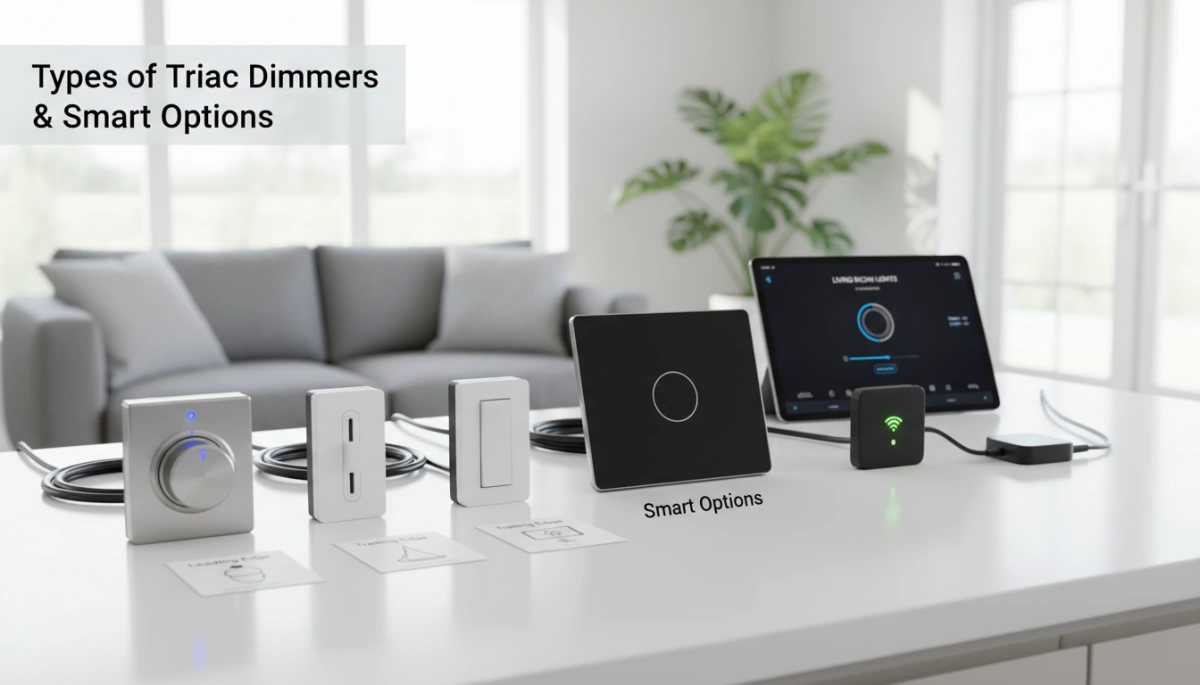
Arten von TRIAC-Dimmern

Standard-TRIAC-Dimmer für die Wandmontage
Für die einfache Nutzung zu Hause und in kleinen Unternehmen ist ein TRIAC-Dimmer für Wandmontage ist nach wie vor die Standardeinstellung. Wichtigste Stile:
- Drehbarer Dimmschalter (Drehknopf): Drehen für Helligkeit, Drücken zum Ein-/Ausschalten. Klassischer “Glühbirnen-Dimmschalter”-Stil, billig und überall.
- Schieberegler Dimmer: Vertikaler oder horizontaler Schieber zur Niveauregulierung, oft mit einem kleinen Ein-/Ausschalter. Gut für Kompatibilität mit Halogen-Dimmern und LED bei Markierung LED-kompatibler Dimmer.
- Paddel-/Wippendimmer: großes Ein/Aus-Paddel und kleine seitliche Schieber oder Tasten. Diese sind in modernen Wohnungen und Büros beliebt, weil sie sauber aussehen und im Dunkeln leicht zu treffen sind.
All dies sind in der Regel Vorsprung / Vorwärtsphasen-Dimmer mit einer einfachen TRIAC-Dimmer-Schaltung für Dimmen der Netzspannung.
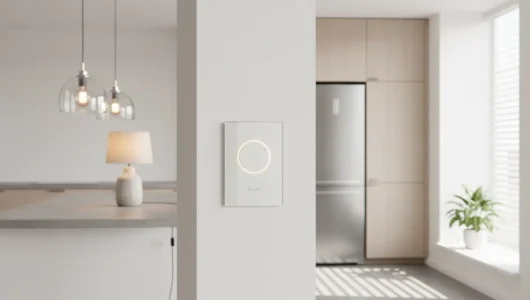
Intelligente TRIAC-Dimmer und WiFi-Optionen
Wenn Sie eine App-Steuerung oder Sprachsteuerung wünschen, ist ein intelligenter TRIAC-Dimmer ist sinnvoller als ein einfaches manuelles Gerät:
- WiFi-Dimmschalter: wird mit Ihrem Router verbunden, arbeitet mit Alexa/Google Home zusammen, oft über App-Szenen und Zeitpläne.
- Zigbee-Dimmer-Modul oder Z-Wave-Dimmer: besser für größere Smart Homes mit Hubs, stabiler für viele Geräte.
- Die meisten intelligenten Geräte verwenden immer noch TRIAC-Dimmer / Phasenabschnittsdimmer Technik im Inneren, aber zusätzlich digitale Steuerung, Zeitschaltuhren und Energiestatistiken.
- Suchen Sie nach “flackerfreies TRIAC-Dimmen” und Summender LED-Dimmschalter Schutz in den technischen Daten, wenn Sie dimmbare LED-Lampen verwenden.
Mehrweg- und Mehrkanal-TRIAC-Anordnungen
Für größere Räume benötigen Sie möglicherweise mehr als einen einpoligen Dimmschalter:
- 3-Wege-Abblendschalter: Dimmen von einer Stelle aus, einfaches Ein- und Ausschalten von der anderen. Häufig in Fluren und Treppen.
- Dimmen in mehreren Richtungen und an mehreren Orten: Mit einigen intelligenten TRIAC-Dimmern können Sie dieselben Leuchten von mehreren Stellen aus mit zusätzlichen Tastaturen steuern.
- Mehrkanal-TRIAC-DimmerEin Gerät, mehrere unabhängige Dimmerkanäle (für Zonen wie Wohnzimmer, Esszimmer und Küche) - nützlich für kleine Projekte im Gastgewerbe und Einzelhandel.
Leistungsstarke TRIAC-Dimmergeräte
Für größere Lasten benötigen Sie mehr als einen einfachen Haushaltsdimmer:
- TRIAC-Hochleistungsdimmer Module für Bars, Restaurants und Geschäftsräume, in denen jeder Stromkreis eine Vielzahl von Geräten betreiben kann.
- Häufig DIN-Schienen- oder Rackmontage, mit Kühlung und geeigneter Wärmeableitung in Dimmern.
- Konzipiert für Dimmen der ohmschen Last (Glühlampen, einige Halogenlampen) und, bei neueren Modellen, für Phasenanschnitt-LED-Treiber lädt, wenn angegeben.
TRIAC-Dimmermodule für den Einbau im Vergleich zu Wandschaltern
Sie müssen nicht immer einen Dimmer für die Wanddose verwenden:
- Unterputz-Dimmermodul: verbirgt sich hinter einem Standardschalter und verwandelt eine normale Wippe in eine Dimmschalter für Heimbeleuchtung und dabei das gewünschte Aussehen beibehalten.
- TRIAC-Dimmermodul im Inneren von Leuchten: Einige Downlights und Stromschienenleuchten haben eine TRIAC-LED-Treiber eingebaut. Sie sind mit “Dimmen der Netzspannung - TRIAC-kompatibel” oder “Universal-Phasenabschnittsdimmer.”
- Wandschalter lassen sich später leichter austauschen; Einbaumodule sind sauberer, wenn der Platz knapp ist oder das Design minimal bleiben soll.
Für alle Typen gilt, dass ich immer die Kompatibilität mit TRIAC-Dimmern zu den eigentlichen Lampen oder dimmbare LED-Treiber zu vermeiden LED-Dimmschalter flackert und brummt.
Wie man den richtigen TRIAC-Dimmer auswählt
Die Wahl des richtigen TRIAC-Dimmer ist nicht kompliziert, aber Sie müssen den Dimmer auf Ihre tatsächliche Last und Ihren Anwendungsfall abstimmen. So mache ich es in echten Projekten.
Anpassung der TRIAC-Dimmerleistung an Ihre Last
Immer die Größe der TRIAC-Dimmer für Wandmontage auf die tatsächliche Gesamtwattzahl in diesem Stromkreis:
- Addieren Sie alle Lampenleistungen an diesem Schalter (z. B. 6 × 8 W LED = 48 W).
- Prüfen Sie die Mindestlast für Dimmer (viele ältere Glühbirnen-Dimmer benötigen 40-60 W, um zu funktionieren).
- Bleiben Sie weit unter dem Höchstwert:
- Für LEDs: Halten Sie sich an 50-60% der Nennleistung.
- Für Halogen/Glühlampen: Ich bleibe unter 80%.
- Bei gemischten Lasten (LED + Halogen) ist die Größe auf den schlimmster Fall: Halogen erzeugt mehr Wärme im Dimmer.
Wenn Sie Stromschienenleuchten, kommerzielle Downlights oder lange LED-Strings betreiben, sollten Sie eine TRIAC-Hochleistungsdimmer oder mehrere Kanäle, anstatt ein Gerät zu überlasten.
Kompatibilitätslisten für TRIAC-Dimmer prüfen
Für LED-kompatibler Dimmer Ich mache immer eine Gegenprobe:
- Suchen Sie nach einem LED-Kompatibilitätsliste oder “getestet mit” Abschnitt aus:
- Die Dimmer Marke (Universal-Phasenabschnittsdimmer, Vorwärtsphasen-Dimmer, Rückwärtsphasen-Dimmer).
- Die LED-Glühbirne oder dimmbarer LED-Treiber Marke.
- Bevorzugen Sie LED-Lampen, die angeben:
- “Kompatibel mit TRIAC-Dimmern mit vor- und nacheilender Flanke”
- oder “Phasenanschnitt-LED-Treiber / Netzspannungsdimmung”.
Wenn die Lampen oder Treiber nicht erwähnen TRIAC-Dimmen, erwarten Sie ein höheres Risiko von LED-Dimmschalter flackert oder Brummen.
Vordere Kante vs. Hintere Kante wählen
Die meisten Menschen sehen nur “Dimmschalter”, aber Phasenabschnittsdimmer Typ wirklich wichtig:
- Dimmen der Vorderkante (Vorwärtsphase / klassischer TRIAC-Dimmer)
- Konzipiert für Glühbirne / Halogen und Dimmen der ohmschen Last.
- Billiger, weithin verfügbar.
- Wahrscheinlicher ist die Ursache Buzz oder Flackern bei einigen LED-Treibern (LED-Treiber mit kapazitiver Last).
- Dimmer für die abfallende Flanke (ELV / Phasenabschnittsdimmer)
- Besser für moderne LED-Treiber und elektronische Transformatoren.
- In der Regel leiser und sanfter bei niedrigen Pegeln.
- Oft vermarktet als Universal-LED-Dimmer oder geräuschloser Dimmschalter.
Wenn ich hauptsächlich LEDs verwende und das Budget es zulässt, tendiere ich zu Phasenabschnittsdimmer / Universal-Phasenabschnittsdimmer für weniger Kopfschmerzen.
Intelligente TRIAC-Dimmer im Vergleich zu manuellen Dimmern
Entscheiden Sie, wie Sie das Licht im Alltag tatsächlich nutzen:
- Wählen Sie eine intelligenter TRIAC-Dimmer / WiFi-Dimmschalter / Zigbee-Dimmermodul wenn Sie:
- Suche App-Steuerung, Zeitpläne, Szenen, Sprachassistenten (Alexa, Google, Siri).
- Bauen Sie eine intelligentes Zuhause aber immer noch mit normalen Netzvorrichtungen.
- Sie benötigen eine Fernbedienung für Geschäfte, Cafés oder Vermietungen.
- Wählen Sie eine einfacher manueller einpoliger Dimmschalter oder 3-Wege-Dimmschalter wenn Sie:
- Ich möchte nur grundlegende Helligkeitsregelung und Zuverlässigkeit.
- Sie brauchen keine Apps, Hubs oder Firmware-Updates.
- Ich bevorzuge eine Einrichtung, die man einfach einrichten und vergessen kann.
Für intelligente Häuser mit intelligente LED-Glühbirnen, verwenden Intelligente Ein/Aus-Relais oder intelligente Schalter mit voller Leistung und vermeiden Sie es, einen TRIAC-Dimmer davor zu stapeln (doppeltes Dimmen verursacht eine Menge Ärger).
Was “flimmerfreies TRIAC-Dimmen” wirklich bedeutet
Wenn Datenblätter behaupten “Flimmerfreies TRIAC-Dimmen”, suche ich nach:
- Konzipiert für Phasenanschnitt-LED-Treiber / TRIAC-LED-Treiber, und nicht nur “dimmbar”.
- Geprüftes geringes Flackern über die gesamter LED-Dimmbereich, und nicht nur 50-100%.
- Unterstützung für Tiefenschärfe (z.B. mindestens 5-10%) ohne:
- Sichtbare Schritte.
- Summender LED-Dimmschalter.
- Frühes Abschalten oder Schimmern.
Konkret bedeutet dies, flackerfreie LED-Beleuchtung bedeutet, dass das Licht auf der Kamera und für das Auge auf jeder Ebene stabil bleibt. Wenn das für Sie wichtig ist (Home Office, Erstellung von Inhalten, Gastgewerbe), sollten Sie eine bekannt gute TRIAC-Dimmerschaltung mit LED-Lampen oder Treibern, die speziell für Kompatibilität mit TRIAC-Dimmern.
Sicherer Einbau eines TRIAC-Dimmers
Wenn Sie einen normalen Lichtschalter durch einen TRIAC-Dimmschalter zu Hause oder in einem kleinen Unternehmen, müssen Sie es wie einen Netzjob behandeln: in der Theorie einfach, gefährlich, wenn Sie Abkürzungen nehmen. So gehe ich an einen Safe heran TRIAC-Dimmer installieren.
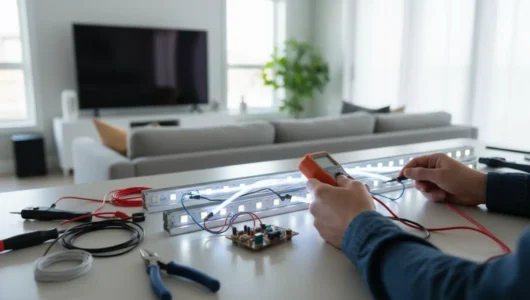
Grundlegende Werkzeuge und Sicherheitsmaßnahmen vor der Verdrahtung eines Dimmers
Werkzeuge, die ich tatsächlich benutze:
- Isolierter Schraubenziehersatz
- Spannungsprüfer oder Multimeter (nicht verhandelbar)
- Abisolierzange / Schneider
- Isolierband und Kabelverbinder (Wagos oder Drehverbinder)
- Taschenlampe oder Stirnlampe
- Kleines Niveau (um die TRIAC-Dimmer für Wandmontage gerade)
Jederzeit sichere Schritte:
- Schalten Sie den Strom am Unterbrecher ab., und nicht nur am Schalter.
- Beschriften Sie den Unterbrecher damit es nicht wieder angestellt wird, während Sie arbeiten.
- Verwenden Sie eine Spannungstester an allen Drähten in der Box, um zu bestätigen 0 V bevor Sie etwas anfassen.
- Arbeit mit trockene Hände, isolierte Werkzeuge und einen festen Stand.
- Wenn Sie sich nicht sicher sind, wie die Verkabelung in Ihrem Land aussieht (die Farbcodes sind weltweit unterschiedlich), anhalten und lokale Normen prüfen.
Einpolige TRIAC-Dimmer-Verdrahtung
Dies ist der übliche Aufbau: ein einpoliger Abblendschalter ein Licht zu steuern.
Grundlegende Schritte:
- Identifizieren:
- Linie (live in) aus dem Gremium
- Last (unter Spannung geschaltet) zum Licht gehen
- Boden (kahl oder grün)
- Neutral (normalerweise nicht bei einfachen TRIAC-Geräten verwendet, es sei denn, es handelt sich um einen intelligenten Dimmer)
- Verbinden:
- Dimmer LINE führen zum Linie/Live vom Unterbrecher
- Dimmer LOAD führen zum laden zum Licht gehen
- Dimmer Boden zum Kastenboden und alle anderen Gründe
- Wenn es sich um eine intelligenter TRIAC-Dimmer das braucht neutral, Verbinden Sie den Nullleiter der Schalttafel mit dem Nullleiter der Leuchte und dem Nullleiter des Dimmers mit einem Verbinder.
- Verlegen Sie die Drähte so, dass sie nicht eingeklemmt werden, und montieren Sie die Unterputz-Dimmermodul oder wechseln.
3-Wege-TRIAC-Dimmer-Verdrahtung (zwei Schalter, eine Leuchte)
Für 3-Wege-Abblendschalter (zwei Steuerungen für eine Leuchte), nur ein Gerät ist der TRIAC-Dimmer; Der andere ist ein Standard-3-Wege-Schalter (oder ein kompatibler Partnerschalter, wenn der Hersteller dies verlangt).
Allgemeine Idee:
- Identifizieren:
- Gemeinsame (in der Regel die dunklere Schraube)
- Zwei Reisedrähte
- Boden und neutral (falls erforderlich)
- In den meisten 3-Wege-TRIAC-Dimmer-Schaltungen:
- Die gemeinsame am Dimmer geht auf Zeile oder laden (je nachdem, in welcher Box sich das Futter befindet)
- Die beiden Reisende zu den Traveller-Klemmen am Dimmer gehen
- Boden ist immer verbunden
- Folgen Sie der Schaltplan, der dem Dimmer beiliegt - Verschiedene Marken und intelligente TRIAC-Dimmer (WiFi, Zigbee, RF) sind nicht alle gleich verdrahtet.
Wenn irgendetwas an den Reisenden oder der Identifizierung der Kabel unklar ist, machen viele Heimwerker hier Fehler.
Prüfung von Erdung, Nullleiter und Kastenfüllung
Bevor Sie die Wallbox an einer TRIAC-Dimmer-Schaltung, überprüfe ich immer:
- Der Boden ist durchgängig:
- Alle Erdungsdrähte zusammengespleißt
- Grünes/Massekabel des Dimmers eingesteckt
- Metallkasten, der mit der Erde verbunden ist, falls verwendet
- Die Neutralen sind korrekt:
- Alle Neutralleiter im Stromkreis sind ordnungsgemäß in einer Gruppe verbunden.
- Neutrale TRIAC-Dimmer sind bei Bedarf enthalten
- Kein Neutralleiter an einer Dimmerklemme, die nicht dafür vorgesehen ist
- Box füllen:
- Der Kasten ist nicht überfüllt - zu viele Kabel in einem kleinen Kasten stellen ein Brandrisiko dar.
- Wenn es eng wird, rüste ich auf eine tieferer Wandkasten für Dimmer ausgelegt (sie laufen wärmer als Standardschalter)
Wenn ich einen Elektriker anrufen würde, anstatt es selbst zu tun
Ich bin mit einfachen Mitteln zufrieden TRIAC-Dimmschalter tauschen, aber ich ziehe trotzdem einen zugelassenen Elektriker hinzu, wenn:
- Ich bin mir nicht 100% sicher, welcher Draht der Leitung, Last, Nullleiter, Läufer oder Erde
- Das Haus hat alte Verkabelung, gemischte Farben, oder ohne Grund
- Ich habe zu tun mit Mehrfachsteckdosen mit mehreren Dimmern und LED-Lasten mit hoher Wattzahl ausgestattet
- Ich muss mich an die lokale elektrische Vorschriften für kommerzielle Beleuchtung, 0-10V gegenüber TRIAC Entscheidungen oder Notschaltungen
- Der Unterbrecher löst aus, die TRIAC-Dimmer surrt schlecht, oder die Lichter gehen nach der Installation nie ganz aus
Wenn Sie irgendwelche Zweifel haben über Dimmen der Netzspannung oder nicht die richtigen Werkzeuge haben, ist es billiger (und sicherer), einen Profi zu bezahlen, als einen durchgebrannten Dimmer, einen beschädigten LED-Treiber oder Schlimmeres zu reparieren.
Fehlersuche bei Problemen mit TRIAC-Dimmern
Behebung des LED-Flackerns bei einem TRIAC-Dimmer mit Phasenanschnitt
Wenn Ihr LED-Dimmschalter bei einem Phasenabschnittsdimmer flackert, liegt das in der Regel an der Last und der Kompatibilität:
- Prüfen Sie die Mindestlast für den Dimmer: Addieren Sie die Wattzahl aller LED-Lampen. Wenn sie unter dem Minimum des Dimmers liegt, fügen Sie entweder eine weitere Lampe hinzu, verwenden Sie eine “Scheinlast” oder wechseln Sie zu einem LED-kompatiblen Dimmer mit einem niedrigeren Minimum.
- Nur dimmbare LED-Treiber verwenden: Vergewissern Sie sich, dass die Lampe oder der Phasenanschnitt-LED-Treiber mit “TRIAC dimming” / “phase cut dimmer compatible” gekennzeichnet ist.
- Einstellen der Low-End-Trimmung: Viele Universal-Phasenabschnittsdimmer haben eine kleine Schraube oder eine digitale Einstellung, um die niedrigste Helligkeit einzustellen. Erhöhen Sie sie ein wenig, bis der LED-Dimmbereich stabil und flimmerfrei ist.
- Vermeiden Sie das Mischen von Lampentypen: Mischen Sie nicht Halogen und LED auf demselben TRIAC-Dimmerkreis. Behalten Sie eine Technologie pro Dimmer bei.
Umgang mit brummenden Lampen oder brummenden Dimmern
Das Summen des LED-Dimmerschalters ist in der Regel ein Zeichen für eine Überlastung des TRIAC-Dimmerschaltkreises:
- Anpassung des Dimmertyps an die Last: Ein Dimmer mit vorlaufender Flanke / Vorwärtsphase funktioniert besser bei Dimmern mit ohmscher Last (Glühlampen, Halogen). Viele LED-Treiber mit kapazitiver Last sind glücklicher mit einem Dimmer mit abfallender Flanke / umgekehrter Phase.
- Einhaltung der Wattzahlen: Belasten Sie den Dimmer nicht mit seiner maximalen Last. Überlast bedeutet mehr Wärmeabgabe in Dimmern und mehr Brummen.
- Wählen Sie Modelle mit “geräuschlosem Dimmschalter”.: Suchen Sie nach LED-kompatiblen Dimmern, die speziell für den geräuschlosen Betrieb mit LED-Lampen ausgelegt sind.
Die Lichter lassen sich nicht vollständig ausschalten oder dimmen
Bei vielen nachgerüsteten TRIAC-Dimmern mit modernen LED-Lampen können Sie ein Glimmen im ausgeschalteten Zustand oder einen begrenzten Dimmbereich feststellen:
- Fehlerstrom: Einige intelligente TRIAC-Dimmer geben einen kleinen Strom für die Elektronik im Inneren ab. Kombinieren Sie sie mit LED-Lampen oder Treibern, die auf dem TRIAC-Dimmer-Kompatibilitätsblatt aufgeführt sind.
- Prüfen Sie auf Nachtbeleuchtung oder Blinker: Pilotlichter im Schalter können die LEDs schwach leuchten lassen. Wechseln Sie zu einem Dimmer mit einer anderen Verdrahtung oder Konstruktion.
- Upgrade auf einen universellen LED-Dimmer: Ein Universal-Phasenabschnittsdimmer mit geeigneter Low-End-Trimmung bietet in der Regel einen tieferen, gleichmäßigeren LED-Dimmbereich.
Schrittweises Testen einer TRIAC-Dimmerschaltung
Wenn ich feststellen will, ob der Dimmer das Problem ist oder die Lampen:
- Schalten Sie den Strom am Unterbrecher aus. und mit einem Prüfgerät zu überprüfen. Sicherheit geht vor.
- Verkabelung inspizieren: Vergewissern Sie sich, dass Leitung, Last und bei einem 3-Wege-Dimmschalter die Reisenden an den richtigen Klemmen angeschlossen sind.
- Umgehung des Dimmers: Verbinden Sie vorübergehend Leitung und Last miteinander (bei ausgeschaltetem Strom) und schalten Sie dann den Strom wieder ein.
- Wenn die Lichter jetzt bei voller Helligkeit normal funktionieren, ist der Dimmer die Schwachstelle.
- Test mit einer bekanntermaßen guten Glühbirne: Verwenden Sie eine dimmbare Glühbirne oder Halogenlampe. Wenn das perfekt funktioniert, sind Ihre LED-Lampen oder der dimmbare LED-Treiber das Problem, nicht der Dimmer.
- Auf Hitze prüfen: Wenn der Dimmer auch bei geringer Last sehr heiß wird, ist er wahrscheinlich überlastet oder defekt.
Einfache Austausche und Upgrades, die die meisten TRIAC-Dimmer-Probleme lösen
In Privathaushalten und bei kleinen gewerblichen Beleuchtungsprojekten sehe ich immer wieder, dass die gleichen Maßnahmen funktionieren:
- Umstellung auf einen LED-kompatiblen Dimmer: Ersetzen Sie einen alten Glühbirnen-Dimmschalter durch einen modernen LED-Dimmschalter, der für Netzspannungsdimmen und TRIAC-LED-Treiberlasten ausgelegt ist.
- Bewegung von der Vorderkante zur Hinterkante: Bei vielen LED-Treibern mit kapazitiver Last reduziert ein Dimmer mit abfallender Flanke (ELV-Dimmer / Phasenumkehrdimmer) Flimmern und Brummen.
- Verwenden Sie bei Bedarf einen 0-10-V- oder PWM-Dimm-Treiber: Für hochwertige, flackerfreie LED-Beleuchtung oder für die Dimmung kommerzieller Beleuchtungen löst die richtige Paarung eines phasengesteuerten LED-Treibers - oder die Umstellung auf 0-10V-Dimmung im Vergleich zu TRIAC oder PWM-Dimmung im Vergleich zu TRIAC - die Probleme oft für immer.
- Erwägen Sie ein intelligentes Relais anstelle eines TRIAC-Dimmers: Bei intelligenten LED-Glühbirnen oder intelligenten Treibern können Sie die Lampe über einen WiFi-Dimmschalter, ein Zigbee-Dimmermodul oder einen RF-Ferndimmer im Relaismodus ein- und ausschalten und das Dimmen intern von der intelligenten Lampe erledigen lassen.
Diese einfachen Überprüfungen, Vertauschungen und die Wahl des richtigen Dimmschalters für LED-Lampen lösen die meisten TRIAC- bzw. ELV-Dimm-Probleme, ohne Ihre Einrichtung übermäßig zu verkomplizieren.
Triac-Dimmer und Smart-Home-Einrichtungen
Verwendung eines intelligenten TRIAC-Dimmers mit Sprachassistenten
In den meisten Haushalten und kleinen Unternehmen ist ein intelligenter TRIAC-Dimmer ist der einfachste Weg, um die Beleuchtung der alten Schule in ein modernes, intelligentes Haus zu bringen.
- Suchen Sie nach WiFi, Zigbee oder RF TRIAC-Dimmer für die Wandmontage die eindeutig sagen, dass sie unterstützen Dimmen der Vorderkante / Vorwärtsphase und “LED-kompatibel”.”
- Stellen Sie sicher, dass sie sich in Ihr Ökosystem integrieren:
- Alexa / Google Assistant / Siri-Verknüpfungen
- Plattformen wie Tuya, SmartThings, Home Assistant
- Einmal gekoppelt, kontrollieren Sie Helligkeit und Ein-/Ausschalten per Sprache oder App, während der TRIAC-Dimmer weiterhin normal dimmt. AC-Phasensteuerung Dimmen an der Wand.
Auf diese Weise bleibt Ihre bestehende Netzverkabelung erhalten, aber Ihre Steuerung wird vollständig intelligent.
TRIAC-Dimmschalter mit intelligenten LED-Glühbirnen koppeln
Das ist der Punkt, an dem viele Menschen falsch liegen.
- Faustformel: wenn die Glühbirne eine intelligente LED-Glühbirne (WiFi, Zigbee, Matter usw.), halten Sie die TRIAC-Dimmer aus dem Weg geräumt.
- Verwendung:
- A Standard-Ein/Aus-Schalter oder
- A intelligentes Relais oder intelligenter Schalter (nicht dimmbar) die die volle Spannung der Glühbirne aufrechterhält.
- Wenn Sie eine Phasenabschnittsdimmer vor eine intelligente Glühbirne halten, erhalten Sie:
- Flimmern
- Falsche Farben
- Gelegentliche Neustarts und Aussetzer
Intelligente Glühbirnen brauchen eine stabile Netzspannung und dimmen intern selbst (in der Regel PWM-Dimmung).
Vermeidung von doppelter Dimmung (TRIAC + intelligente Treiber)
“Doppeltes Dimmen” bedeutet, dass sowohl die TRIAC-Dimmer und die LED-Treiber oder intelligentes System versuchen, gleichzeitig zu dimmen.
Um es zu vermeiden:
- Bei Verwendung einer dimmbarer LED-Treiber mit TRIAC-Eingang (TRIAC-LED-Treiber / Phasenanschnitt-LED-Treiber):
- Dimmen nur am TRIAC-Wanddimmer.
- Stellen Sie den Treiber oder den App-Dimmer auf 100% ein.
- Bei Verwendung einer 0-10V Dimmer, DALI oder PWM Dimm-Treiber:
- Verwenden Sie diese Kontrollmethoden direkt.
- Do nicht einen TRIAC-Dimmer auf der Netzseite hinzufügen.
- Bei Verwendung von intelligenten Glühbirnen oder intelligenten Armaturen:
- Verwenden Sie eine nicht abblendendes intelligentes Relais oder Schalter, und dimmen Sie von der App aus.
Eine Dimmmethode pro Stromkreis ist die Regel. TRIAC vs. ELV vs. 0-10V vs. DALI sollte gewählt und nicht gestapelt werden.
Wann sollte ein intelligentes Relais anstelle eines TRIAC-Dimmers verwendet werden?
Ich benutze eine intelligentes Relais statt eines TRIAC-Dimmers in diesen Fällen:
- Die Lichter haben integrierte intelligente Steuerung (intelligente Glühbirnen, intelligente Panels, WiFi-Downlights).
- Die Vorrichtungen verwenden 0-10V Dimmen, DALI oder benutzerdefiniertes PWM-Dimmen, und nicht die Phase geschnitten.
- Ich brauche nur volle Ein/Aus-Steuerung, keine analoge Dimmung an der Wand.
- Ich möchte geräuschloser Betrieb mit kein Summen des LED-Dimmschalters und keine Kompatibilitätsprobleme.
A intelligentes Relais hält den Strom sauber und überlässt dem intelligenten LED-System das Dimmen, die Farbe und die Szenen.
Die Zukunft des TRIAC-Dimmens in der modernen vernetzten Beleuchtung
Selbst mit DALI, 0-10V und intelligenten Systemen, die schnell wachsen, TRIAC-Dimmen wird nicht verschwinden:
- Die meisten Haushalte weltweit laufen noch Dimmen der Netzspannung auf Glühbirnen-Abblendschalter oder LED-kompatible TRIAC-Dimmer.
- Die Hersteller drängen auf Universal-Phasenabschnittsdimmer (Vorwärtsphase + Rückwärtsphase) und flackerfreies TRIAC-Dimmen Treiber, um die bestehende Verkabelung am Leben zu erhalten.
- Bei Nachrüstungen und kostensensiblen Projekten kann ein intelligenter TRIAC-Dimmer ist nach wie vor der wichtigste erschwingliche, Plug-and-Play-Aufrüstung.
Bei Neubauten mit vollständiger intelligenter Infrastruktur tendiere ich zu 0-10V, DALI oder nativer Smart.
In bestehenden Wohnungen und kleinen Unternehmen, eine gut abgestimmte Kombination aus TRIAC-Dimmer und LED-Treiber ist nach wie vor eine der praktischsten und zuverlässigsten Optionen auf dem Markt.





 EN
EN DE
DE ES
ES PT
PT FR
FR RU
RU AR
AR IT
IT TR
TR FI
FI SV
SV HU
HU NL
NL